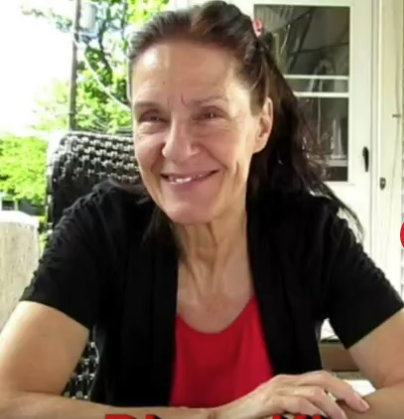
In this 10-minute video Diane King makes a poignant statement about how there is only one country on earth in which the people are not permitted to celebrate or commemorate their own history or heroes, in the way that all other countries do.
Why is it that the German people cannot celebrate their own?
Thank you Diane, for this powerful video.

9 Responses
Yes, to freely and constructively critique is good.
It is unfortunate to have exaggerations.
There is information to counter the lies: the institute of historical review, the barnes review and American free press.
The usurpers of Palestine twist news. Currently, in New York city there was a clash between the chosenites and Palestinian Americans.
Not knowing the whole story, I guess that there is a slant against the palestinians.
Herr zundel work was not in vain, the same for the Schaeffer’s and Lady Renouf, good success for her.
Diesen Beitrag von Diane King darf man sich als Deutscher nicht anschauen. Er wurde von Bitchute für Deutschland gesperrt. So kann ich nicht erfahren, was Diane King zu diesem Thema sagt. Ich kann aber das beste aus meiner Lage machen und darüber nachsinnen, was es bedeutet, wenn der Trauerprozeß überhaupt nicht in Gang kommen darf. Es geht also nicht darum, wie unterdrückte und nicht verarbeitete Trauer sich auswirkt. Diese führt langfristig zu Angsterkrankungen, Suchterkrankungen und Depressionen, also zu klinischen Beschwerden und Krankheiten. Oder zu psychosomatischen Krankheiten wie Kopf- und Rückenschmerzen. Betroffene pflegen ihre sozialen Beziehungen nicht mehr, interessieren sich nicht für ihre Hobbys und werden perspektivlos. Wer nicht trauern kann, kann auch sonst nicht fühlen, also sich weniger hinsichtlich von Selbstwert und Nächstenliebe entwickeln, bleibt menschlich gesehen gefangen und zurück. Das heißt aber auch, die geistige, geistliche, transzendente Perspektive kann sich nicht entfalten. Wenn ich einen geliebten Menschen betrauern muß, ist das ein starker Motor für meine spirituelle Entwicklung. Wenn ich meinen Schmerz nicht leben kann, ihn unterdrücken muß, wird er als Spannungsgefühl chronisch. Wir wissen, daß schwere Traumatisierung sich transgenerational vererbt. Ich kenne das aus eigenem Erleben. Meine Mutter mußte einen tödlichen Sturz ihrer kleinen Schwester im Kindesalter erleben, für den sie unbewußt eine Teilschuld erhielt, weil sie ihre Mutter zu spät rufen konnte. Meine Großmutter hatte noch das Kleid der Kleinen in der Hand, als sie im dritten Stock auf das Straßenpflaster fiel und zerschmettert wurde. Das hatte mit dem Krieg noch nichts zu tun, belastete aber das Familienleben und führte dazu, daß sie schon vor dem Krieg unzureichend trauern konnte. Dann kam der Krieg und mit ihm die Erfahrung von “Höllensturm”, der Ausbombung in Hamburg. Sie flüchteten in das östlich von Hamburg gelegenen Mecklenburg und erlebten dort die bedrückende Situation, auch immer wieder Bomberalarm, der dann weitgehend Berlin galt, aber meine Mutter Hunderte von Malen re-traumatisierte. Zur gleichen Zeit erreichte sie die Todesnachricht ihres geliebten Vater. Auch hier war null Raum für Trauer. Meine Großmutter und Urgroßmutter waren mit Fluchtgedanken beschäftigt und nähten Fluchtrucksäcke. Auch diese beiden Erwachsenen hatten die Ausbombung erlebt, meine Urgroßmutter sogar noch mehr in der Stadtmitte. Sie hatte erlebt, wie Menschen im glühenden Asphalt feststeckten oder als lebende Phosphorfackeln sich ins Wasser stürzten und wie eine Hauswand vor ihr niederstürzte. Dann flüchtete meine Mutter als Kind vor den Russen und erlebte ständige Bombenangriffe aus der Luft, sah Tod und Elend um sich her. Die Nachkriegszeit war auch zunächst von Lebensgefahr gekennzeichnet und nicht einfach für meine Großmutter, die junge Kriegerwitwe und meine herzkranke, durch die Flucht völlig überforderte Urgroßmutter. Sie fühlte sich ständig als Last und Behinderung für das Überleben der Kinder. Ich denke, sie war zu diesem Zeitpunkt schwermütig und meine Großmutter völlig abgeschnitten von jedem Gefühl. Ich erlebte meine Mutter als selbstbezogen, im Grund war sie nur mit der eigenen Trauer befaßt, die sie suizidal und unbewußt aggressiv nicht richtig erlebte. Meine Aufgabe war, sie davor zu bewahren. Man kann sich vorstellen, was das mit der Generation der Kinder macht. Auch Freundinnen von mir erlebten sich so verantwortlich, völlig überfordert und sicherlich nicht kindgemäß aufwachsend. Alarmsirenen lösten in meiner Mutter heftige Furcht und Alpträume aus. Wenn in der Familie vom Krieg gesprochen wurde, flüchtete sie. Sie und meine Urgroßmutter zählten zu den schweigenden Generationen. Immerhin meine Großmutter konnte davon sprechen. Wenigstens erfuhr ich also intellektuell, was sie erlebt hatten. Ich träumte oft von Flugzeugen, die über meinem Haus schwebten, mich beobachteten oder von Hubschraubern, die mich verfolgten. Meine Freundin erzählte mir ähnliches. Ich bin die Kriegs-Enkel-Generation bzw. die Kriegskind-Folgegeneration. Uns wird nachgesagt, wir würden an unerklärlichen Ängsten und einem unsicheren Lebensgefühl sowie emotionalen Blockaden leiden. Es wird die generelle Schwierigkeit vererbt, sich von Schicksalsschlägen zu erholen, sowie Beziehungsschwierigkeiten, ein Mangel an emotionaler Erreichbarkeit und einem Gefühl von Isolation trotz erlebter Fürsorge in Bezug auf den Körper. Ein rastloser Arbeitssinn, ein geringes Selbstgefühl, eine Gefahr von Ausbrennen durch Überarbeitung. Etwa 1/3 der Bevölkerung sei davon betroffen. In dieser Beschreibung kann ich mich selbst erkennen. Auch in meinem Umfeld finde ich enorm viele Menschen, die wie ich kinderlos sind, und Bindungsprobleme haben. Ganz sicherlich führt die Prägung durch Krieg und Nachkrieg zu einer verstärkten Unterwürfigkeit der Bevölkerung und einem verminderten Zusammenhalt oder – wie bei mir – zu verstärkten Ängsten bei Aufmüpfigkeit. Ich lasse mir dennoch den Mund nicht verbieten, auch wenn ich zu vielem wegen akuter Verfolgungsgefahr schweigen muß oder es indirekt ausdrücken oder darauf hoffen, daß der andere das Nichtsgesagte mit hinzufügt, weil er aus einer offeneren Perspektive beobachten kann. Ein Volk, das nicht trauern darf, wird nicht heilen können. Ein großes Volk mitten in Europa, das sein Elend nicht zeigen kann. Das wehrlos weiterer Schmähung, Ausbeutung und Unterdrückung ausgesetzt ist. Das ist für seine Nachbarn auch nicht gut. Erst einmal, weil diese nun schon jahrzehntelang von der Produktivität dieses Volkes leben und sich durchfüttern lassen, was ihre eigene Produktivität stört. Zweitens stört dies auch jegliches Verständnis im Sinne von Nächstenliebe und zerstört die schmarotzenden Völker von innen. Natürlich bedeutete es auch, daß die Deutschen von ihrer gottgegebenen Mission (Kultur, Handel, Erfindungen) abgehalten werden. Lüge ist keine geeignete Basis für eine funktionierende Gesellschaft. Auf Lüge gedeiht nicht einmal Technik oder Naturwissenschaft wirklich, geschweige denn Kultur und gesellschaftliche Entwicklung. Wie lange will die westliche Welt noch zuschauen, wie Deutsche Krüppel sind? Wie soll jemand mit einem künstlich erniedrigten Selbstwert sich gerade machen, der sich ständigen Angriffen und Verhöhnungen ausgesetzt sieht und einem Feind von innen gegenüber steht, der sich in den Dienst der Herrschaft stellt und dem Strafverfolgung eine zweite Haut geworden ist? Aus Deutschland wird die Befreiung nicht kommen (können). Unsere Landsleute verhindern das.
Translation of Hilken’s comment:
As a German, I am not allowed to watch this video by Diane King. It has been blocked in Germany by Bitchute. So I cannot find out what Diane King has to say on this subject. However, I can make the best of my situation and reflect on what it means when the grieving process is not allowed to begin at all. So it is not a question of how suppressed and unprocessed grief affects us. In the long term, this leads to anxiety disorders, addictions and depression – in other words, to clinical symptoms and illnesses. Or to psychosomatic illnesses such as headaches and back pain. Those affected no longer nurture their social relationships, lose interest in their hobbies and lose their sense of purpose. Those who cannot grieve are also unable to feel in other ways; they develop less in terms of self-esteem and love for others, and remain, in human terms, trapped and left behind. But this also means that the intellectual, spiritual and transcendent perspective cannot unfold. When I have to mourn a loved one, this is a powerful driving force for my spiritual development. If I cannot experience my pain, if I have to suppress it, it becomes chronic, manifesting as a sense of tension. We know that severe trauma is passed down through the generations. I know this from my own experience. My mother witnessed her little sister’s fatal fall as a child, for which she was unconsciously blamed in part because she had been too slow to call her mother. My grandmother was still holding the little girl’s dress when she fell from the third floor onto the pavement and was crushed to death. This had nothing to do with the war yet, but it weighed heavily on family life and meant that she was unable to grieve properly even before the war. Then came the war and with it the experience of the ‘Höllensturm’, the bombing of Hamburg. They fled to Mecklenburg, east of Hamburg, and experienced the oppressive situation there, including repeated air-raid alerts—which were largely aimed at Berlin but re-traumatised my mother hundreds of times. At the same time, she received the news of her beloved father’s death. Here, too, there was no room for mourning. My grandmother and great-grandmother were preoccupied with thoughts of fleeing and were sewing escape rucksacks. These two adults, too, had experienced the bombing; my great-grandmother even more so in the city centre. She had seen people stuck in the glowing asphalt or plunging into the water like living phosphorus torches, and a house wall collapsing right in front of her. Then, as a child, my mother fled from the Russians and endured constant aerial bombardments, witnessing death and misery all around her. The post-war period was also initially fraught with danger and far from easy for my grandmother, the young war widow, and my great-grandmother, who suffered from heart disease and was completely overwhelmed by the ordeal of fleeing. She constantly felt like a burden and an obstacle to the children’s survival. I think she was melancholic at that time, and my grandmother was completely cut off from any emotion. I saw my mother as self-absorbed; essentially, she was preoccupied only with her own grief, which she did not properly process, becoming suicidal and unconsciously aggressive. My task was to protect her from that. One can imagine what that does to the children’s generation. Friends of mine, too, felt similarly responsible, completely overwhelmed and certainly not growing up in a child-friendly environment. Air-raid sirens triggered intense fear and nightmares in my mother. Whenever the family spoke of the war, she would flee. She and my great-grandmother belonged to the silent generations. At least my grandmother was able to talk about it. At least, intellectually speaking, I came to understand what they had been through. I often had dreams of aeroplanes hovering over my house, watching me, or of helicopters chasing me. My girlfriend told me similar stories. I belong to the ‘war grandchildren’ generation, or rather the generation following the ‘war children’. We are said to suffer from inexplicable fears, a sense of insecurity, and emotional blockages. We inherit a general difficulty in recovering from misfortunes, as well as relationship difficulties, a lack of emotional accessibility, and a feeling of isolation despite having experienced physical care. A restless drive to work, low self-esteem, a risk of burnout from overwork. Around a third of the population is said to be affected by this. I recognise myself in this description. In my own circle, too, I find a huge number of people who, like me, are childless and have attachment issues. Certainly, the impact of war and the post-war period leads to increased submissiveness among the population and reduced cohesion or – as in my case – to heightened fears of defiance. Nevertheless, I will not allow myself to be silenced, even if I have to remain silent on many matters due to the acute risk of persecution, or express them indirectly, or hope that the other person will add what has been left unsaid, because they can observe the situation from a more open perspective. A people who are not allowed to grieve will never be able to heal. A great people in the heart of Europe who cannot show their misery. Who are defenceless against further abuse, exploitation and oppression. This is not good for their neighbours either. Firstly, because for decades now they have been living off this people’s productivity and allowing themselves to be supported by it, which hinders their own productivity. Secondly, this also undermines any sense of charity and destroys the parasitic nations from within. Of course, it also means that the Germans are being prevented from fulfilling their God-given mission (culture, trade, inventions). Lies are not a suitable foundation for a functioning society. Not even technology or the natural sciences can truly flourish on lies, let alone culture and social development. How much longer will the Western world stand by and watch as Germans are crippled? How is someone with an artificially diminished sense of self-worth supposed to stand tall when they face constant attacks and mockery and are confronted by an enemy from within who has placed themselves in the service of the ruling class and for whom prosecution has become second nature? Liberation will not (and cannot) come from Germany. Our compatriots are preventing that.
Danke, Hilken, and Monika. I’m honored. The 4th of July video was one of the most important ones I think I have ever done. And at some point I hope that Hilken will be able to listen to it because of all that it STILL means. THANK you, Monica for translating her thoughts and experiences.
BEST Diane King
Liebe Diane, nun habe ich Ihren sehr guten Beitrag gefunden, zu dem ich Ihnen gratuliere. Das Zitat unserer Nationalhymne mit der 1. Strophe sagt alles: Deutschland über alles in der Welt, wenn es stets zum Schutz und Trutze brüderlich zusammenhält. Von der Maas bis an die Memel, von der Etsch bis an den Belt.” Deutsche haben so lange auf eine Einigung gewartet, doch nur die Jahre 1871 bis 1918 brachten uns diese. Leider auch nicht die Einheit mit den Österreichern oder gar deutschen Schweizern oder Südtirolern. Danach verlor Deutschland große Teile des Reiches wieder. Über Hitler äußere ich mich besser nicht wegen der reinen Gedankenfreiheit, die ich habe. Das ist eines der Lieblingslieder der Deutschen: Die Gedanken sind frei, wer kann sie erraten. Sie fliegen vorbei wie nächtliche Schatten. Kein Mensch kann sie wissen. Kein Jäger erschießen. Es bleibet dabei. Die Gedanken sind frei.” Wir sind nicht die erste Generation Deutscher, die sich der Freiheit der Gedanken erfreuen kann und muß. Ich würde hier gerne sehr viel schreiben. Doch der Verfassungsschutz (Inlandsgeheimdienst) verbietet es mir. Ich muß diese Gedanken also für mich behalten. Mit besten Grüßen Susanne H.
Translation of Hilken’s comment:
Dear Diane, I’ve finally found your excellent post, and I’d like to congratulate you on it. The quote from the first verse of our national anthem says it all: “Germany above all in the world, when it stands together in brotherhood for protection and defense. From the Meuse to the Memel, from the Adige to the Belt.” Germans have waited so long for unification, yet only the years 1871 to 1918 brought it to us. Unfortunately, this did not include unity with the Austrians, or even the German-speaking Swiss or South Tyroleans. Afterward, Germany lost large parts of the empire again. I’d better not comment on Hitler, for the sake of the pure freedom of thought I possess. This is one of the Germans’ favorite songs: “Thoughts are free; who can guess them? They fly by like shadows at night. No one can know them. No hunter can shoot them down. It remains so. Thoughts are free.” We are not the first generation of Germans who can and must enjoy freedom of thought. I would love to write a great deal here. But the Office for the Protection of the Constitution (domestic intelligence service) forbids me to do so. So I must keep these thoughts to myself. Best regards, Susanne H.
First, thank you, Monika, for translating this and letting me know of “Hilken’s” response. Please understand, Susanne. We aren’t really free here either. We have a huge monster cloud of tyranny approaching. Yes, we express what we can, while we can, but we do see it looming on the horizon. *** It was truly good to hear from you and pray you are well. Express when you can. In a lot of ways, I believe Monika’s brother, Alfred, is freer than all of us. Please know that Americans are becoming enlightened about the plight of the Germans and the lies of the holocaust that relegate ALL OF US to the status of prisoners of thought censors, with varying degrees of expression. Monika can certainly attest to that. As Jim and I used to (and still) say – We will say WHAT we can, WHEN we can, AS LONG AS WE CAN. Love in and for the Truth in/of Christ. Diane King
Liebe Diane,
ja wir alle spazieren auf Lichtstrahlen hoch oben. Jeder von uns. Absturz ist möglich. Ich möchte mich bei Jim und Ihnen bedanken für die vielen guten Videos, die Sie ins Netz stellen. Eine interessante Beobachtung. Gerade suchte ich nach einem Zitat von dem Propagandisten Stalins Ilya Ehrenburg vom 22.12.1944 über die 6 Millionen-Zahl. Ich habe die deutschsprachige KI beim Lügen überführt, aber sie gab mir das Zitat nicht. Als ich auf englisch fragte, gab sie mir deutsche Antworten und blockierte weiterhin, bzw. gab sich widersprechende Informationen. Dann ergänzte ich einige englische Wörter und endlich erhielt ich das volle Zitat: “Ask any German prisoner why his fellow countrymen annihilated six million innocent people, and he will reply quite simply: ‘Why, they were Jews.’” Soviet War News
Möge unser Gott mit uns sein! Susanne
Translation of Hilken’s comment:
Dear Diane,
Yes, we are all walking on rays of light high above. Every one of us. A fall is possible. I would like to thank Jim and you for the many excellent videos you post online. An interesting observation. I was just looking for a quote from Stalin’s propagandist Ilya Ehrenburg dated December 22, 1944, regarding the figure of 6 million. I caught the German-language AI in a lie, but it wouldn’t give me the quote. When I asked in English, it gave me German answers and continued to block me, or provided contradictory information. Then I added a few English words and finally received the full quote: “Ask any German prisoner why his fellow countrymen annihilated six million innocent people, and he will reply quite simply: ‘Why, they were Jews.’” Soviet War News
May our God be with us! Susanne